
Understanding Student Finance UK 2026: A Guide to Loans, Grants, and Repayment Thresholds for Higher Education
Navigating the complexities of higher education funding can often feel like deciphering a cryptic code. For those aspiring to attend university in the academic year 2026/2027, a clear understanding of Student Finance UK 2026 is not just beneficial, but absolutely essential. This comprehensive guide will demystify the various components of student finance, including tuition fee loans, maintenance loans, grants, eligibility criteria, and the critical repayment thresholds that will affect your financial future. Whether you’re a prospective student, a parent, or an educator, this article aims to provide all the crucial information you need to make informed decisions about funding your higher education journey in the UK.
The landscape of student finance is subject to regular updates and adjustments, reflecting changes in government policy, economic conditions, and educational priorities. The 2026/2027 academic year will bring its own set of rules and figures, which can significantly impact how much you can borrow, what support you’re entitled to, and how and when you’ll begin repaying your loans. Our focus on Student Finance UK 2026 ensures you receive the most up-to-date and relevant information available, helping you plan effectively and confidently embark on your university experience.
What is Student Finance UK 2026?
Student Finance UK 2026 refers to the system of financial support available to students in England (and similar, though distinct, systems in Scotland, Wales, and Northern Ireland) to help cover the costs of higher education. This support primarily comes in the form of loans and, for some, grants, designed to cover tuition fees and living costs. The primary body responsible for administering this finance in England is the Student Loans Company (SLC).
Key Components of Student Finance UK 2026:
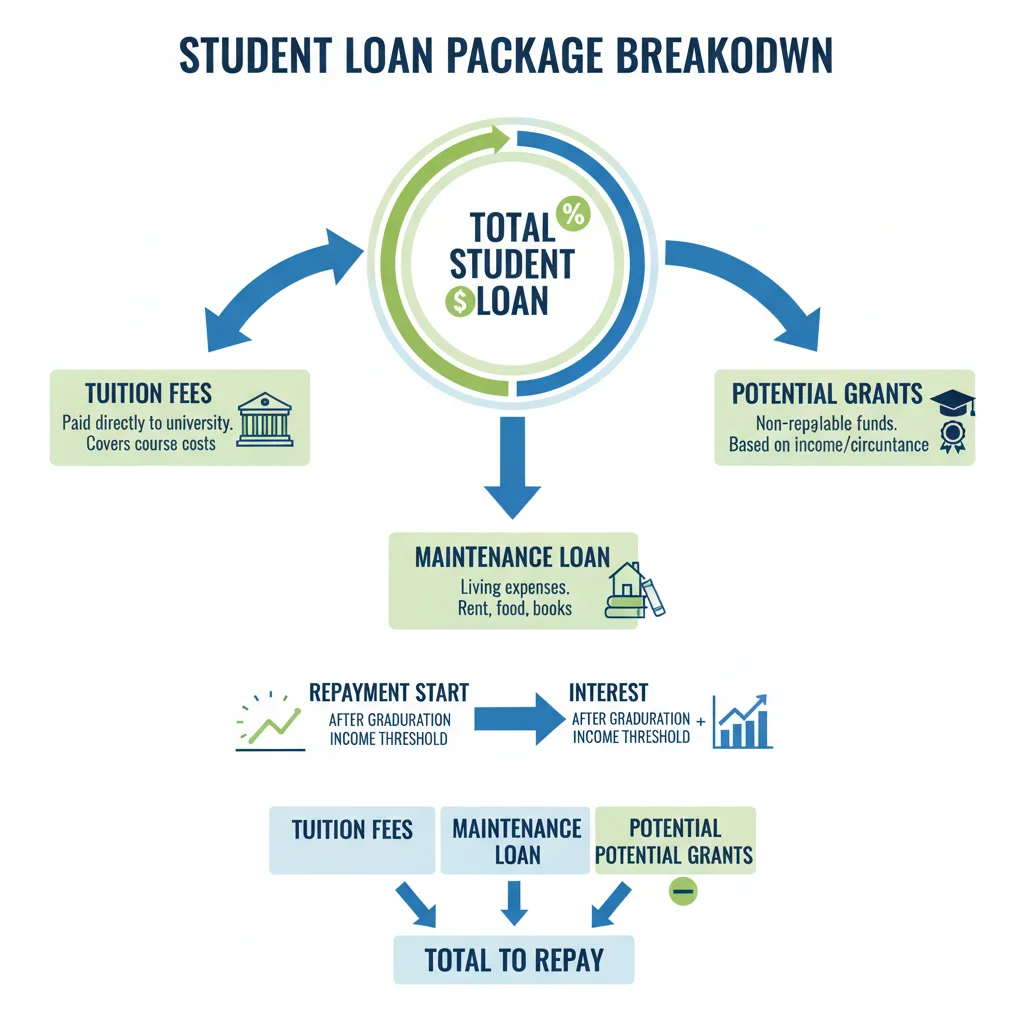
- Tuition Fee Loans: These cover the full cost of your university tuition fees, up to a maximum amount (currently £9,250 per year for most courses at public universities in England). This loan is paid directly to your university or college.
- Maintenance Loans: Designed to help with living costs such as rent, food, transport, and books. The amount you receive depends on several factors, including your household income, where you live and study, and whether you study in London.
- Grants and Bursaries: Unlike loans, grants and bursaries do not need to be repaid. While government-funded maintenance grants have largely been replaced by loans, specific grants are still available for students with particular circumstances (e.g., those with disabilities or dependants). Universities also offer their own bursaries based on financial need or academic merit.
Understanding these components is the first step towards successfully managing your university finances. Each element plays a crucial role in ensuring that financial constraints do not become a barrier to accessing higher education. As we delve deeper into Student Finance UK 2026, we will explore each of these aspects in greater detail, providing insights into how they work and what you need to know for the upcoming academic year.
Eligibility Criteria for Student Finance UK 2026
Before you can even think about applying for Student Finance UK 2026, it’s vital to understand the eligibility requirements. These criteria are primarily based on your nationality or residency status, the type of course you plan to study, and your previous study history. Meeting these conditions is non-negotiable for securing financial support.
Residency and Nationality
To qualify for full student finance, you typically need to be a UK national or have ‘settled status’ in the UK, and have been ordinarily resident in the UK for at least three years before the start of your course. There are specific rules for EU, EEA, and Swiss nationals, as well as for those with various types of immigration status (e.g., refugees, those with humanitarian protection). Post-Brexit, the rules for EU students have become stricter, generally requiring them to have settled or pre-settled status to be eligible for home fee status and student loans. It’s crucial to check the latest guidance from the Student Loans Company regarding your specific residency status for Student Finance UK 2026.
Course and Institution Eligibility
Your course must be a ‘qualifying course’ at an eligible institution. This usually means a full-time or part-time undergraduate degree, a Foundation Degree, an HND, or an HNC at a publicly funded university or college, or a private institution that has specific course designation for student finance. Postgraduate courses have different funding arrangements, which are outside the scope of this undergraduate-focused guide but are also part of the broader Student Finance UK 2026 framework.
Previous Study
Generally, you can only receive student finance for your first higher education qualification. If you’ve previously studied a higher education course, even if you didn’t complete it, this can affect your eligibility for future funding. There are some exceptions, such as for specific healthcare courses or if you’re ‘topping up’ a qualification like an HNC to a full degree. Always declare any previous study when applying for Student Finance UK 2026 to avoid issues later on.
Ensuring you meet all these criteria is the first significant hurdle in accessing your financial support. If you’re unsure about any aspect of your eligibility, it’s always best to contact the Student Loans Company or your prospective university’s admissions or finance office for clarification. Proactive engagement will save you potential headaches down the line when applying for Student Finance UK 2026.
Tuition Fee Loans for 2026/2027
The tuition fee loan is arguably the most straightforward component of Student Finance UK 2026. It covers the cost of your course fees, up to the maximum set amount, which for the 2026/2027 academic year is expected to remain at £9,250 for most undergraduate courses in England. This loan is not based on household income, meaning all eligible students can apply for the full amount, regardless of their financial background.
How Tuition Fee Loans Work:
- Direct Payment: The loan is paid directly from the Student Loans Company to your university or college, usually in three instalments throughout the academic year. You never see this money in your personal bank account.
- Non-Income Assessed: Unlike maintenance loans, your household income does not affect the amount of tuition fee loan you receive. If your course costs £9,250, you can borrow £9,250.
- Part-time Study: If you’re studying part-time, you can also apply for a tuition fee loan. The amount you receive will depend on the intensity of your course (measured by the number of credits you study per year) and the fee charged by your institution.
It’s important to remember that while the tuition fee loan covers the cost of your education upfront, it is still a loan that you will eventually need to repay. The terms of repayment, which we will discuss in detail later, are crucial to understand. While the idea of accumulating debt can be daunting, the tuition fee loan ensures that the cost of tuition does not prevent eligible students from pursuing higher education. For Student Finance UK 2026, this loan remains a cornerstone of the funding system.
Maintenance Loans: Your Living Costs Covered
The maintenance loan is designed to help you cover your day-to-day living expenses while studying. This can include rent, utility bills, food, transport, books, and other personal costs. Unlike the tuition fee loan, the amount of maintenance loan you receive is income-assessed, meaning it depends on your household income.
Factors Affecting Your Maintenance Loan Amount for 2026/2027:
- Household Income: This is the most significant factor. The lower your household income, the more maintenance loan you are typically eligible for. ‘Household income’ usually refers to the taxable income of your parents (if you’re under 25 and not financially independent) or your partner (if you’re married or in a civil partnership).
- Where You Live and Study:
- Living at Home: If you live with your parents while studying.
- Living Away from Home (outside London): If you move out to study in a city other than London.
- Living Away from Home (in London): If you study in London, you receive a higher amount due to the significantly higher cost of living in the capital.
- Course Length: The loan is paid per academic year, usually in three instalments.
- Special Circumstances: Students with dependants or disabilities may be eligible for additional support, which can affect their overall maintenance package.
For the 2026/2027 academic year, the exact figures for maintenance loans will be announced closer to the application period. However, the underlying principles of income assessment and varying rates based on living arrangements are expected to remain consistent with previous years. It’s crucial for applicants of Student Finance UK 2026 to provide accurate household income details to ensure they receive the correct amount of support.
The maintenance loan is paid directly into your bank account, giving you control over your living expenses. Effective budgeting is key to making this money last throughout the term. Many students find it helpful to create a budget plan even before starting university to manage their funds responsibly. This proactive approach is vital for anyone relying on Student Finance UK 2026 for their living costs.
Grants and Bursaries: Non-Repayable Support
While loans form the bulk of Student Finance UK 2026, there are also various forms of non-repayable support available. These grants and bursaries can significantly reduce the financial burden on students, as they do not need to be paid back.
Government-Funded Grants (Specific Circumstances):
- Disabled Students’ Allowance (DSA): This grant helps cover extra costs students may incur because of a disability, learning difficulty, or health condition. It’s not income-assessed and can cover specialist equipment, non-medical helpers, and travel costs.
- Parents’ Learning Allowance: For student parents, this allowance helps with course-related costs for those with dependent children. The amount depends on your income and that of your dependants.
- Childcare Grant: Helps with the cost of registered or approved childcare for dependent children. The amount depends on your income and the number of children you have.
- Adult Dependants’ Grant: For students who have an adult who is financially dependent on them.
These grants are a vital part of Student Finance UK 2026, ensuring that students with additional responsibilities or needs are not disadvantaged. Eligibility for these grants is assessed separately from your main student finance application, and you will typically need to provide additional evidence.
University and College Bursaries and Scholarships:
Beyond government support, many universities and colleges offer their own bursaries and scholarships. These can be based on a variety of criteria:
- Financial Need: Many institutions offer bursaries to students from low-income households, often automatically if you’ve consented to share your financial information with your university.
- Academic Merit: Scholarships may be awarded to students who achieve high grades in their previous studies.
- Specific Subjects: Some scholarships target students studying particular subjects where there is a skill shortage or for outreach purposes.
- Sporting or Artistic Talent: Support may be available for students who excel in sports or the arts.
It is highly recommended that you research the specific bursaries and scholarships offered by your chosen university as part of your overall understanding of Student Finance UK 2026. These can provide a significant boost to your finances and are often overlooked. Information is usually available on the university’s website or through their student support services.
Applying for Student Finance UK 2026
The application process for Student Finance UK 2026 typically opens in the spring before the academic year starts. While you don’t need a confirmed university place to apply, it’s advisable to apply as early as possible to ensure your funding is in place by the start of your course.
Key Steps in the Application Process:
- Create an Account: If you haven’t already, create an account on the Student Finance England website (or the relevant national body for Scotland, Wales, or Northern Ireland).
- Complete the Online Application: Fill in your personal details, course information (if known), and details about your household income if you’re applying for a maintenance loan or income-assessed grants. Your parents or partner may also need to provide their financial information.
- Submit Evidence: You may be asked to provide evidence to support your application, such as birth certificates, passports, or financial statements.
- Track Your Application: You can monitor the progress of your application online.
- Receive Your Entitlement Letter: Once assessed, you’ll receive a letter detailing how much student finance you’re entitled to.
Even if you’re unsure which university you’ll attend, apply with your first-choice institution. You can easily change your course or university details later if needed. Missing the application deadline can mean your funding is delayed, causing unnecessary stress at the start of term. Therefore, early application is a critical piece of advice for anyone dealing with Student Finance UK 2026.
Repayment Thresholds and Terms for 2026/2027
Understanding how and when you repay your student loans is just as important as knowing how to apply for them. The repayment system for Student Finance UK 2026 is income-contingent, meaning you only start repaying once your income is over a certain threshold, and the amount you repay is based on how much you earn, not how much you owe.
The Repayment Plan (Plan 2 and Plan 5):
Most students who started university in England from September 2012 onwards are on ‘Plan 2’. However, students starting courses from September 2023 onwards (including those who will be applying for Student Finance UK 2026) are on ‘Plan 5’. The key differences are:
- Plan 2: Repayment starts when your income is over £27,295 per year. You repay 9% of anything you earn over this threshold. Loans are written off after 30 years.
- Plan 5: Repayment starts when your income is over £25,000 per year. You repay 9% of anything you earn over this threshold. Loans are written off after 40 years.
It’s important to note that these thresholds can be adjusted by the government. For Student Finance UK 2026, the £25,000 threshold for Plan 5 is expected to remain, but always check the latest government guidance. Repayments are automatically deducted from your salary through the PAYE system if you’re employed, or through self-assessment if you’re self-employed.
Interest Rates:
The interest rate on student loans is also a significant factor. For Plan 5 loans (which will apply to Student Finance UK 2026 applicants), the interest rate is set at the Retail Price Index (RPI) plus 0%. This means the interest rate will match inflation, so in real terms, your loan balance will not increase beyond inflation while you are studying or if your income is below the repayment threshold. Once you are earning above the repayment threshold, interest will continue to be charged at RPI. This is a crucial difference from Plan 2, which charges RPI plus up to 3% depending on income.
What Happens if You Don’t Earn Enough?
If your income falls below the repayment threshold, your repayments will stop automatically. They will only restart once your income consistently exceeds the threshold again. This income-contingent system acts as a safety net, ensuring you’re not burdened with repayments during periods of low income or unemployment.
Early Repayments:
You can choose to make voluntary repayments at any time to pay off your loan faster. However, given the income-contingent nature and the fact that loans are written off after a set period, many financial advisors suggest that for most graduates, making early repayments might not be the most financially savvy decision, especially with the Plan 5 interest rate being RPI. It’s often more beneficial to prioritize other financial goals, such as saving for a house deposit or contributing to a pension. Always consider your personal financial situation and potentially seek independent financial advice when dealing with Student Finance UK 2026 repayments.

Budgeting and Financial Planning for University
Securing Student Finance UK 2026 is only half the battle; effectively managing your money throughout your university years is equally critical. Many students find themselves struggling financially if they don’t plan their budget carefully.
Tips for Effective Budgeting:
- Create a Detailed Budget: List all your income (maintenance loan, part-time job, parental contributions) and all your expenses (rent, food, bills, transport, socialising, course materials). Use a spreadsheet or a budgeting app.
- Track Your Spending: Keep a record of where your money goes. This helps identify areas where you might be overspending.
- Prioritize Essentials: Ensure rent, food, and essential bills are covered first.
- Look for Student Discounts: Many retailers, restaurants, and services offer student discounts. Make sure to take advantage of them.
- Part-time Work: A part-time job can supplement your income, but be careful not to let it interfere with your studies.
- Emergency Fund: Try to put aside a small amount for unexpected expenses.
- University Support: Most universities have financial support teams who can offer advice and guidance on budgeting, or even provide hardship funds in emergencies.
Proactive financial planning can significantly enhance your university experience, reducing stress and allowing you to focus more on your studies and social life. Don’t wait until you’re struggling; start planning your finances as soon as you receive your Student Finance UK 2026 entitlement letter.
Changes and Considerations for 2026/2027 Applicants
As mentioned, the student finance landscape is dynamic. While the core structure of Student Finance UK 2026 is likely to remain similar to the current Plan 5 system, it’s always wise to stay informed about any potential changes.
Key Areas to Monitor:
- Repayment Threshold Adjustments: While the £25,000 threshold for Plan 5 is set, government policy can always lead to adjustments.
- Interest Rate Policy: The RPI-only interest rate for Plan 5 is a significant benefit, but future governments could review this.
- Tuition Fee Caps: The £9,250 tuition fee cap has been in place for several years. Any changes would have a direct impact on the tuition fee loan.
- Eligibility for Specific Grants: While core grants like DSA are likely to remain, smaller grants or bursaries might be subject to review.
- Post-Brexit Impact: For international students (especially EU nationals), continue to monitor residency requirements and fee status.
Reliable sources for updates include the official Student Finance England website, the government’s education department publications, and reputable student finance news outlets. Make it a habit to check these resources periodically as you prepare for your university application and for applying for Student Finance UK 2026.
Conclusion
Embarking on a higher education journey in the UK is an exciting prospect, and understanding Student Finance UK 2026 is a fundamental step in making that dream a reality. This guide has aimed to provide a comprehensive overview of tuition fee loans, maintenance loans, grants, eligibility criteria, the application process, and crucially, the repayment terms for the upcoming academic year.
Remember, student finance is designed to ensure that financial background does not prevent talented individuals from accessing university. While the system involves taking on debt, the income-contingent repayment structure and the non-repayable grants available for specific circumstances offer a safety net. By being informed, applying early, and budgeting wisely, you can navigate the financial aspects of university with confidence.
We encourage all prospective students and their families to delve deeper into the specific details relevant to their individual circumstances. Utilize the official Student Finance England website, engage with university financial aid offices, and don’t hesitate to seek advice if you have specific questions. With a solid grasp of Student Finance UK 2026, you’ll be well-prepared to focus on your studies and make the most of your university experience.