Council Tax Support 2026: Reduce Your Bill by Up to 100%
The landscape of household finances in the UK is constantly evolving, and one of the most significant outgoings for many residents is Council Tax. As we look ahead to 2026, understanding the mechanisms available to alleviate this burden becomes crucial. This comprehensive guide delves into Council Tax Support 2026, offering a detailed examination of how individuals and families might be able to reduce their bill by a substantial amount, potentially up to 100%, based on the criteria expected to be in place. Navigating the complexities of local government funding and welfare provisions can be daunting, but with the right information, you can ensure you’re not paying more than you legitimately owe.
Council Tax is a charge levied by local authorities on residential properties to fund local services. These services range from waste collection and street lighting to policing, education, and social care. The amount you pay is determined by the valuation band of your property and the specific charges set by your local council. However, for those on low incomes or experiencing certain vulnerabilities, financial assistance is available through what is commonly known as Council Tax Support (CTS), or sometimes referred to as Council Tax Reduction (CTR). This support is not a national benefit with a single set of rules; rather, it is administered by individual local authorities, each with its own scheme, albeit often following a broad framework set by central government.
The year 2026 is still some time away, but planning and understanding potential changes now can significantly impact your future financial stability. While specific legislative changes cannot be predicted with absolute certainty, the general principles and common criteria for Council Tax Support 2026 are likely to remain consistent with current trends, focusing on income, savings, household composition, and specific vulnerabilities. This article aims to provide a robust framework for understanding and accessing this vital support.
Understanding Council Tax Support: What is it and How Does it Work?
Council Tax Support 2026 is a localized means-tested benefit designed to help people on low incomes pay their Council Tax bill. It replaced Council Tax Benefit in April 2013 and has since been the responsibility of individual local councils. This decentralization means that while the core purpose remains the same – to assist those who struggle to pay – the specifics of each scheme can vary significantly from one council to another. Some councils offer more generous schemes, potentially covering up to 100% of the bill for certain claimants, while others may cap the maximum support at a lower percentage, such as 75% or 80%.
The amount of Council Tax Support 2026 you could receive depends on several factors:
- Your income: This includes earnings from employment, benefits (such as Universal Credit, Jobseeker’s Allowance, Employment and Support Allowance), pensions, and any other income sources.
- Your savings and investments: Most councils disregard savings below a certain threshold (e.g., £6,000 or £16,000 for pensioners). If your savings exceed this, it may affect your eligibility or the amount of support you receive.
- Your household circumstances: This includes the number of adults and children living in your home, their ages, and any disabilities or caring responsibilities.
- Your Council Tax band: The higher your property’s band, the higher your Council Tax bill, and potentially, the higher the amount of support needed.
- Other benefits you receive: Being in receipt of certain benefits, particularly those that are also means-tested, can often streamline the application process or automatically qualify you for maximum support.
It’s important to differentiate Council Tax Support 2026 from other Council Tax discounts and exemptions. Discounts (like the single person discount) reduce your bill regardless of income, while exemptions mean you don’t have to pay Council Tax at all (e.g., for certain student households or properties occupied solely by severely mentally impaired individuals). Council Tax Support, however, is specifically for those with low incomes.
Who is Eligible for Council Tax Support in 2026?
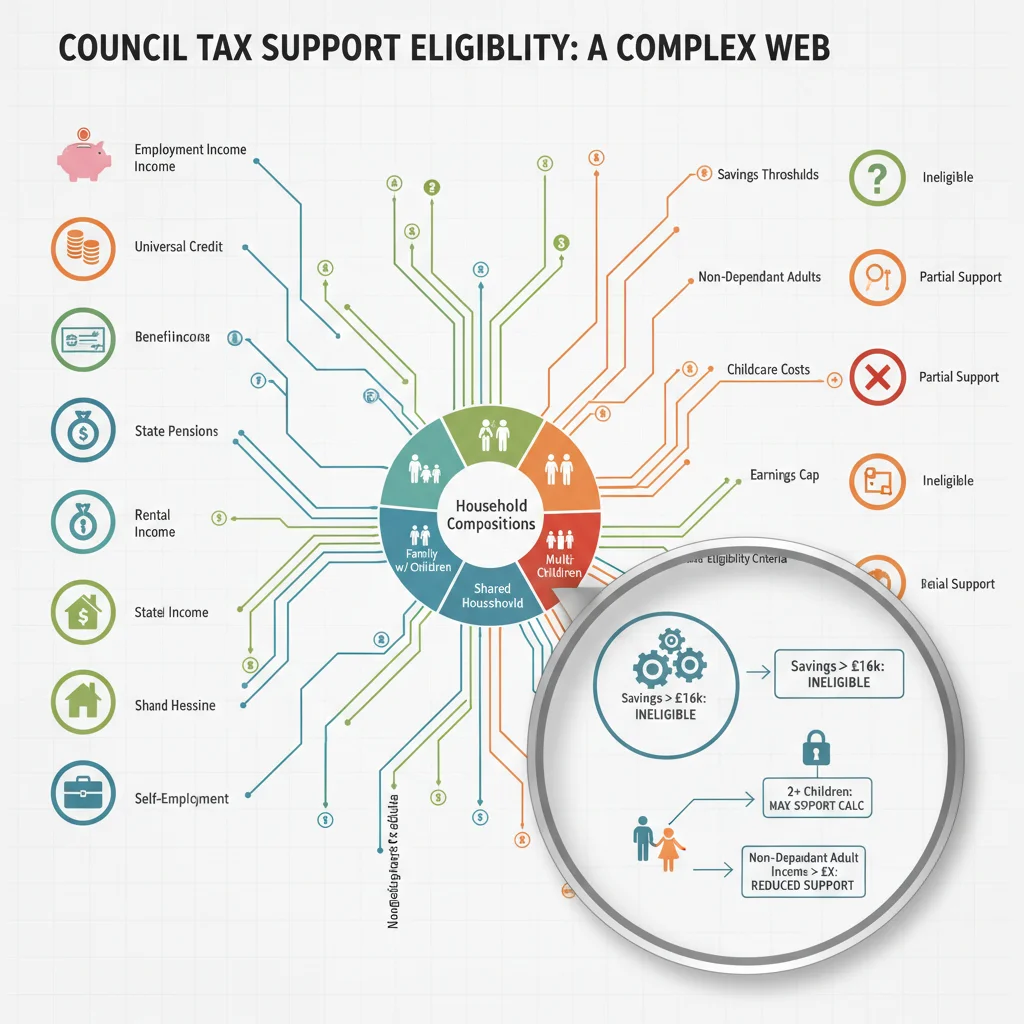
Eligibility for Council Tax Support 2026 will primarily hinge on your financial situation and personal circumstances. While each council sets its own scheme, there are common threads that run through most, if not all, CTS policies. Understanding these general criteria is the first step towards determining your potential eligibility.
Income and Savings Thresholds
The most significant factor is your income. If you are working, your net income (after tax, National Insurance, and certain allowable expenses) will be assessed. If you are not working, your benefit income will be considered. Councils will compare your income to a ‘needs’ figure, which is based on your household size and composition. If your income falls below or slightly above this figure, you will likely be eligible for some level of support.
Savings and capital are also crucial. For working-age applicants, most councils apply a capital limit, typically around £6,000. If your savings exceed this, you may not be eligible. For pensioners, the limit is generally higher, often aligning with the Housing Benefit capital limit of £16,000. However, some councils may have different local rules, so always check with your specific authority for Council Tax Support 2026 criteria.
Household Composition and Vulnerabilities
Your household composition plays a vital role. Councils consider:
- Number of adults: How many adults live in the property? Are they partners, adult children, or lodgers?
- Children: The number of dependent children and their ages.
- Disability and health: If you or anyone in your household has a disability, is a carer, or receives specific disability benefits (e.g., Personal Independence Payment, Attendance Allowance), this can increase your ‘needs’ figure, potentially leading to more support.
- Students: Full-time students are generally disregarded for Council Tax purposes, but their income might be considered if they are applying for support themselves.
Certain groups are often prioritized or automatically qualify for maximum support under Council Tax Support 2026 schemes. These typically include:
- Pensioners receiving Guarantee Credit of Pension Credit.
- Individuals receiving Income Support, income-based Jobseeker’s Allowance, or income-related Employment and Support Allowance.
- Claimants of Universal Credit, though their entitlement is assessed differently, often through a ‘transitional protection’ or ‘reduction’ model.
It’s important to note that even if you work full-time, you might still be eligible for Council Tax Support 2026 if your income is low, especially if you have children or high childcare costs. Never assume you won’t qualify without checking.
Applying for Council Tax Support in 2026: The Process
The application process for Council Tax Support 2026 will largely mirror current procedures, focusing on submitting accurate information to your local council. While specific forms and online portals may evolve, the core requirements for evidence will likely remain consistent.
How to Apply
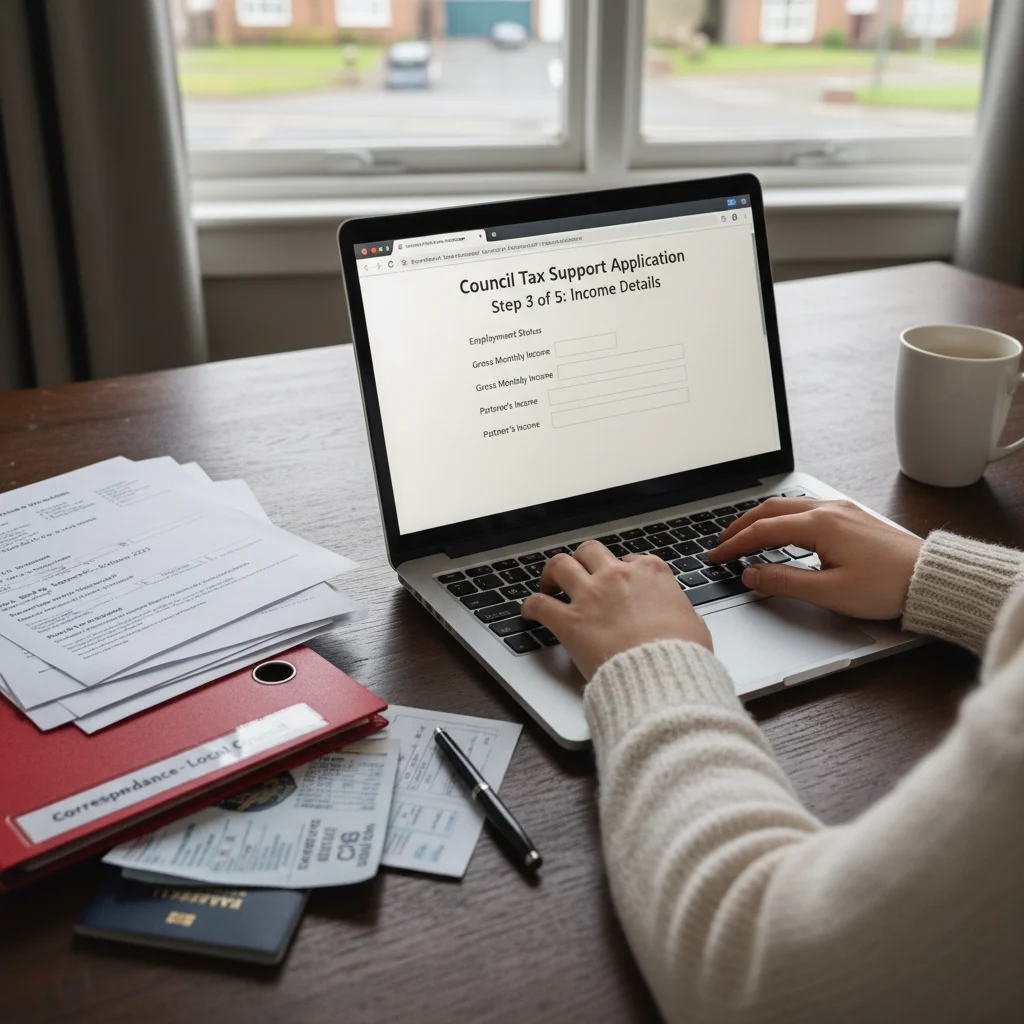
Most local councils provide an online application form for Council Tax Support 2026. This is often the quickest and most efficient way to apply. You can usually find this form on your council’s website under their ‘Council Tax’ or ‘Benefits’ section. If you prefer, or if you don’t have internet access, you can typically request a paper form or visit your local council office for assistance.
When applying, you will need to provide detailed information about:
- Your identity: Proof of identity for all adults in the household (e.g., passport, driving licence, birth certificate).
- Income: Payslips (usually 5 weekly, 3 fortnightly, or 2 monthly), self-assessment tax returns, benefit award letters, pension statements.
- Savings and investments: Bank statements, building society passbooks, share certificates.
- Household details: Tenancy agreement, proof of address, birth certificates for children.
- Rent and housing costs: If applicable, though this is primarily for Housing Benefit, it might be requested for a holistic assessment.
It is crucial to provide all requested documentation promptly. Delays in submitting evidence can lead to delays in your application being processed, and potentially, a missed opportunity for timely support. Councils usually have a deadline for submitting evidence after an initial application is made.
Backdating Your Claim
In certain circumstances, you might be able to have your Council Tax Support 2026 claim backdated. This means that if you were eligible for support but didn’t apply at the time, the council might pay you for a period before your application date. The rules for backdating vary:
- Working-age applicants: Typically, you can request backdating for up to six months. You must show ‘good cause’ for not applying earlier (e.g., severe illness, bereavement, misinformation from a welfare advisor).
- Pension-age applicants: If you are of pension credit age, you can usually have your claim backdated automatically for up to three months without needing to show ‘good cause’.
Always enquire about backdating if you believe you were eligible before you applied. Providing a clear explanation and any supporting evidence for your delay is essential.
Maximizing Your Council Tax Support in 2026: Tips and Strategies
Securing the maximum possible Council Tax Support 2026 requires a proactive approach and a thorough understanding of the available provisions. Beyond simply applying, there are several tips and strategies that can help you reduce your bill as much as possible.
Check for Other Discounts and Exemptions First
Before applying for Council Tax Support 2026, ensure you have claimed any other discounts or exemptions you are entitled to. These reduce your overall bill, meaning less reliance on means-tested support. Common discounts include:
- Single Person Discount: A 25% discount if you are the only adult living in the property.
- Disability Reduction Scheme: If a permanently disabled person lives in the property and it has been adapted to meet their needs (e.g., an extra bathroom, kitchen, or room for a wheelchair), your bill may be reduced to the next lowest band.
- Discounts for Carers, Apprentices, and Students: Certain individuals are ‘disregarded’ for Council Tax purposes, potentially leading to a discount.
Exemptions can mean you pay no Council Tax at all for a period, for example, if the property is unoccupied due to the resident being in hospital or care, or if it’s occupied solely by students. Applying for these first can significantly simplify your financial burden.
Report Changes in Circumstances Promptly
Your entitlement to Council Tax Support 2026 is based on your current circumstances. Any changes in income, savings, household members, or health can affect the amount of support you receive. It is a legal requirement to inform your local council of any changes that might affect your benefit entitlement. Failing to do so can lead to overpayments, which you will have to pay back, and potentially penalties.
Examples of changes to report include:
- Starting or stopping work.
- A change in your wages or working hours.
- A change in other benefits you receive.
- Someone moving into or out of your home.
- A change in your savings or investments.
Reporting changes promptly ensures your support is accurate and helps avoid future financial difficulties.
Seek Independent Advice
Navigating the benefits system can be complex. If you are unsure about your eligibility for Council Tax Support 2026, need help with your application, or want to appeal a decision, seek independent advice. Organizations such as Citizens Advice, welfare rights organizations, and local charities offer free, impartial advice and can often help you complete forms or represent you in appeals.
Potential Changes and Future Outlook for Council Tax Support in 2026
While this guide focuses on the expected framework for Council Tax Support 2026, it’s important to acknowledge that the landscape of local government funding and welfare provision is subject to change. Economic shifts, central government policy decisions, and local council priorities can all influence the specifics of CTS schemes.
Impact of Universal Credit
The ongoing rollout of Universal Credit (UC) continues to impact how Council Tax Support 2026 is assessed. For UC claimants, local councils often use a ‘net income’ figure provided by the Department for Work and Pensions (DWP) to calculate CTS. This integration aims to streamline processes but can also introduce complexities, particularly for those with fluctuating incomes. Councils have varying approaches to how they treat the housing element of UC when assessing CTS.
Local Scheme Variations
The power given to local authorities to design their own schemes means that comparing Council Tax Support 2026 between different areas can be difficult. Some councils may choose to offer more generous support to protect vulnerable residents, while others, facing tighter budgets, might implement stricter criteria or cap the maximum percentage of support. Staying informed about your specific council’s scheme is paramount.
Advocacy and Future Reforms
There is ongoing advocacy from various organizations for a more standardized and generous national system of Council Tax Support. Arguments are often made that the current fragmented system leads to a ‘postcode lottery’ of support and adds unnecessary administrative burden. Whether these calls for reform will lead to significant changes by 2026 remains to be seen, but it is a discussion that continues to shape the future of local welfare provisions.
For now, the best approach is to operate within the existing framework, focusing on understanding your local council’s specific Council Tax Support 2026 scheme and ensuring you provide all necessary information accurately and promptly.
Common Pitfalls and How to Avoid Them
Applying for and receiving Council Tax Support 2026 can sometimes come with challenges. Being aware of common pitfalls can help you navigate the process more smoothly and avoid unnecessary complications.
Incomplete Applications
One of the most frequent reasons for delays or rejections is an incomplete application. Councils require specific documentation to verify your income, savings, and household circumstances. Missing documents, or providing outdated information, will inevitably slow down the process. Before submitting your application, double-check that you have included everything requested and that all information is current and accurate.
Misunderstanding ‘Non-Dependant’ Deductions
If you have other adults living with you who are not your partner (e.g., adult children, friends, or relatives), they may be considered ‘non-dependants’. Councils often make deductions from your Council Tax Support 2026 entitlement based on the income of these non-dependants, assuming they contribute to household costs. These deductions can significantly reduce the amount of support you receive. Ensure you accurately report all non-dependants and their income, and understand how your council’s scheme applies these deductions.
Ignoring Council Communications
Councils will often send letters or emails requesting further information, confirming decisions, or notifying you of changes. It’s crucial to read and respond to these communications promptly. Ignoring them can lead to your claim being suspended, reduced, or even cancelled, potentially resulting in arrears on your Council Tax bill.
Not Appealing a Decision
If you believe a decision made by your council regarding your Council Tax Support 2026 is incorrect, you have the right to appeal. Many people don’t appeal due to a lack of understanding of the process or fear of bureaucracy. However, appealing can lead to a successful reconsideration of your claim. The first step is usually to ask for a ‘reconsideration’ or ‘revision’ by the council, explaining why you believe the decision is wrong. If still unsatisfied, you can then appeal to an independent Valuation Tribunal. Seeking advice from a welfare rights organization is highly recommended for appeals.
Assuming You Won’t Qualify
Perhaps the biggest pitfall is simply assuming you won’t qualify for Council Tax Support 2026. Many people on modest incomes, particularly those with children, disabilities, or caring responsibilities, are eligible for some level of support. The only way to know for sure is to apply. Even a small reduction can make a significant difference to your household budget over a year.
Conclusion: Securing Your Council Tax Support in 2026
Navigating the intricacies of Council Tax Support 2026 requires diligence, accurate information, and a proactive approach. While the specifics of local schemes can vary, the fundamental goal remains constant: to provide financial relief to those who need it most. By understanding the eligibility criteria, preparing thoroughly for the application process, and being aware of potential pitfalls, you can significantly increase your chances of reducing your Council Tax bill, potentially by up to 100%.
As we move towards 2026, staying informed about your local council’s specific scheme, promptly reporting any changes in your circumstances, and seeking independent advice when needed will be your strongest tools. Don’t let the complexity deter you; the potential savings from Council Tax Support 2026 can provide much-needed breathing room in your household budget, ensuring you’re only paying what’s fair and affordable for your local services. Take the time now to assess your situation, gather your documents, and prepare to make an informed application. Your financial well-being depends on it.