Universal Credit Reforms 2026: 15% Household Budget Impact Analysis

Universal Credit Reforms 2026: What Changes Mean for Your Household Budget – A 15% Impact Analysis
The landscape of welfare benefits in the United Kingdom is constantly evolving, and a significant shift is on the horizon with the planned Universal Credit 2026 reforms. These changes are not merely administrative adjustments; they represent a fundamental recalibration of the support system for millions of households. Understanding these impending alterations is crucial for anyone currently receiving Universal Credit, or those who might in the future, as they could have a profound and direct impact on household budgets, potentially by as much as 15% for some claimants.
The government’s rationale behind these reforms often centers on promoting work incentives, simplifying the benefits system, and ensuring fiscal sustainability. However, for the individuals and families who rely on Universal Credit to meet their daily needs, the practical implications can be far-reaching and challenging. This comprehensive guide aims to dissect the proposed changes, analyze their potential financial repercussions, and provide actionable advice on how to prepare for what lies ahead. We will explore the key areas of reform, delve into the projected 15% impact, and offer strategies to mitigate financial strain, ensuring you are as well-equipped as possible to navigate these significant adjustments.
Understanding the Core of Universal Credit 2026 Reforms
To truly grasp the magnitude of the upcoming changes, it’s essential to first understand the foundational principles of Universal Credit itself. Introduced as a single, streamlined payment, Universal Credit replaced six legacy benefits: Income Support, income-based Jobseeker’s Allowance, income-related Employment and Support Allowance, Housing Benefit, Child Tax Credit, and Working Tax Credit. Its aim was to simplify the system, make work pay, and provide consistent support. However, its implementation has been met with both praise and criticism, and the 2026 reforms seek to address some of the ongoing challenges and policy objectives.
Key Areas Targeted for Reform
While specific details are still emerging and subject to parliamentary approval, several key areas have been highlighted as targets for the Universal Credit 2026 reforms. These often include:
- Conditionality and Sanctions: A renewed focus on stricter conditionality requirements, potentially leading to more rigorous job search expectations, increased reporting obligations, and a higher likelihood of sanctions for non-compliance. This could mean a tighter leash on how claimants interact with the job market and their work coaches.
- Work Capability Assessments (WCAs): Significant changes are anticipated in how work capability is assessed, particularly for individuals with health conditions or disabilities. The aim is often to encourage more people into some form of work, even if adapted, potentially reducing the number of claimants placed in the ‘Limited Capability for Work and Work-Related Activity’ (LCWRA) group.
- Benefit Cap Adjustments: While the benefit cap is regularly reviewed, the 2026 reforms might introduce further adjustments to its thresholds or how it is applied, impacting larger families or those in high-rent areas.
- Earnings Taper Rate: Although the taper rate has seen positive adjustments in recent years (reducing the rate at which Universal Credit is withdrawn as earnings increase), future reforms could potentially revisit this, or introduce new mechanisms to manage the interplay between earnings and benefits.
- Administrative Changes: Digitalization and automation are ongoing trends. Further administrative changes could streamline processes but also potentially create new hurdles for those less digitally literate or with complex cases.
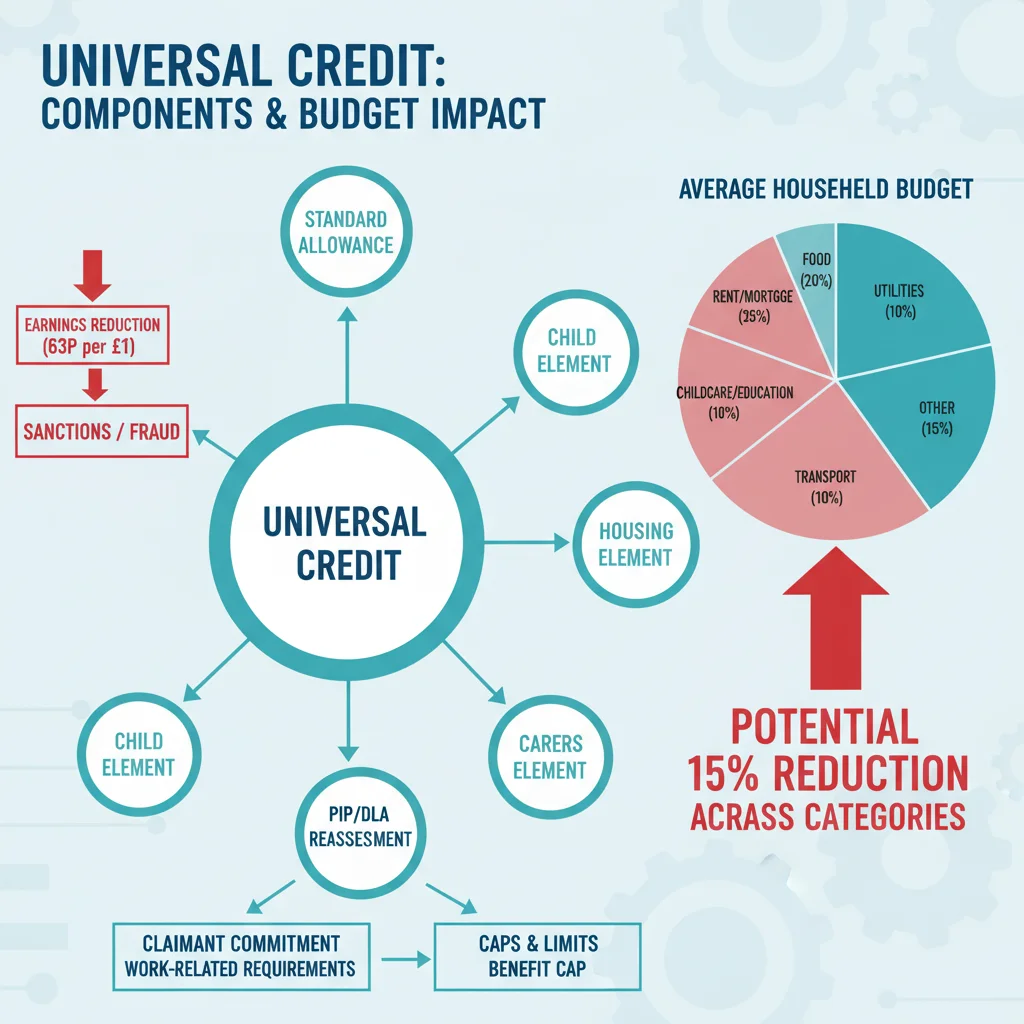
Each of these areas, when altered, has a ripple effect across a claimant’s financial stability. The cumulative impact is what we need to focus on, especially when considering the projected 15% reduction in overall household income for some.
The Projected 15% Impact: A Deep Dive into Household Budgets
The figure of a ‘15% impact’ is a stark one, and it’s essential to understand where this projection comes from and what it truly signifies for different types of households. This isn’t a blanket 15% cut for every Universal Credit recipient; rather, it represents the potential maximum or average reduction for certain demographics or under specific reform scenarios. Typically, those most affected are often:
- Individuals with Health Conditions or Disabilities: Changes to WCAs could see some individuals moved from LCWRA to other groups, potentially losing the LCWRA element of their Universal Credit, which is a significant component. This could result in a substantial drop in their monthly entitlement.
- Families with Multiple Children: While the two-child limit is already in place, any further adjustments to child elements or the benefit cap could disproportionately affect larger families.
- Claimants Subject to Increased Sanctions: If conditionality becomes stricter and sanctions more frequent, regular deductions from Universal Credit payments due to non-compliance could easily amount to a significant percentage of a household’s income.
- Those in Areas with High Housing Costs: If Housing Element calculations are altered or the benefit cap is adjusted downwards in real terms, claimants in expensive rental markets could face shortfalls.
Let’s consider a hypothetical example to illustrate the 15% impact. Imagine a single parent with two children, currently receiving the full Universal Credit entitlement, including housing costs and child elements. If reforms lead to a reclassification of their work capability, or a stricter application of the benefit cap, or even a series of sanctions due to new conditionality rules, their monthly income could see a noticeable reduction. A 15% reduction on an average Universal Credit payment could translate to hundreds of pounds less per month, forcing difficult choices between essentials like food, heating, and rent.
Breaking Down the Potential Loss
A 15% reduction isn’t just a number; it translates into real-world consequences. For a household already living on a tight budget, this could mean:
- Food Poverty: Less money for healthy meals, leading to reliance on cheaper, less nutritious options or increased use of food banks.
- Housing Instability: Difficulty covering rent or mortgage payments, increasing the risk of arrears, eviction, or homelessness.
- Increased Debt: Resorting to high-interest loans or credit cards to cover essential expenses, trapping households in a cycle of debt.
- Reduced Access to Essentials: Struggling to afford utilities, transportation, or essential household items.
- Mental Health Impact: The constant stress and anxiety associated with financial insecurity can severely impact mental well-being for all family members.
Navigating the Changes: Strategies for Preparation
While the prospect of reduced income can be daunting, proactive preparation is key to mitigating the negative effects of the Universal Credit 2026 reforms. There are several steps individuals and families can take to safeguard their financial stability.
1. Stay Informed and Monitor Developments
The first and most crucial step is to stay abreast of official announcements and detailed policy papers from the Department for Work and Pensions (DWP). Information will be released gradually, and understanding the specifics as they emerge will allow for tailored preparation. Follow reputable news sources, government websites, and advice charities for updates.
2. Review Your Current Entitlement and Budget
Conduct a thorough review of your current Universal Credit statement. Understand exactly how your payment is calculated, including all elements (standard allowance, child element, housing element, LCWRA element, etc.). Simultaneously, create a detailed household budget, if you don’t already have one. List all income and expenditure, identifying essential costs versus discretionary spending. This will help you pinpoint areas where savings can be made or where a reduction in Universal Credit will hit hardest.
3. Explore Work Opportunities and Training
If reforms are geared towards increasing work incentives and conditionality, exploring options to increase your earnings or improve your employability becomes paramount. This could involve:
- Part-time Work: If you’re not currently working, even a few hours a week can make a difference, and the Universal Credit taper rate is designed to allow you to keep a significant portion of your earnings.
- Increased Hours: If you’re already working part-time, consider if increasing your hours is feasible.
- Skills Development: Look into free or subsidized training courses that could enhance your job prospects or allow you to move into higher-paying roles. Your work coach might be able to advise on available opportunities.
- Self-Employment: Explore the viability of self-employment, understanding the Universal Credit rules around it (e.g., the start-up period and Minimum Income Floor).
4. Seek Financial Advice and Support
Don’t hesitate to reach out for professional advice. Organizations like Citizens Advice, Turn2us, and local welfare rights organizations offer free, impartial guidance on benefits, debt, and budgeting. They can help you understand the specific implications of the Universal Credit 2026 changes for your situation and explore all available options. They can also assist with challenging decisions or navigating complex DWP processes.
5. Build a Financial Buffer (If Possible)
Even small savings can provide a crucial safety net. If your budget allows, try to build an emergency fund, however modest. This can help cover unexpected costs or bridge gaps during periods of reduced income. Explore options for low-cost savings accounts or credit unions.
6. Understand Your Rights and Appeal Processes
If you believe a decision regarding your Universal Credit claim is incorrect, or if you are unfairly sanctioned, it’s vital to understand your rights and the appeal process. Seek advice from welfare rights charities, who can guide you through mandatory reconsiderations and tribunals. Document all interactions with the DWP.
The Broader Socio-Economic Context of Universal Credit 2026
The Universal Credit 2026 reforms do not occur in a vacuum. They are part of a broader socio-economic context, influenced by factors such as the cost of living crisis, inflation, employment rates, and the government’s fiscal priorities. Understanding this context helps to frame the motivations behind the changes and their potential wider societal impact.
Impact on Vulnerable Groups
While the reforms aim for efficiency and work incentives, there is a significant concern about their disproportionate impact on vulnerable groups. People with chronic health conditions, disabilities, carers, and single-parent households often face unique barriers to employment and may find it harder to adapt to stricter conditionality or reduced support. Charities and advocacy groups are likely to play a crucial role in highlighting these impacts and campaigning for safeguards.
The ‘Making Work Pay’ Dilemma
A central tenet of Universal Credit is ‘making work pay,’ ensuring that claimants are always better off in work than on benefits. However, the effectiveness of this principle can be undermined by low wages, high childcare costs, and the withdrawal rate of benefits. The 2026 reforms will be scrutinized on whether they genuinely enhance work incentives or inadvertently push more people into precarious employment without adequate financial reward.
Furthermore, the availability of suitable jobs, particularly for those with health conditions or caring responsibilities, is a critical factor. If the reforms increase pressure to work without a corresponding increase in accessible job opportunities or support services, the intended positive outcomes may not materialize, leading instead to increased hardship.
Long-Term Economic Effects
The long-term economic effects of the Universal Credit 2026 reforms are also a subject of debate. While governments often argue that such reforms lead to increased employment and reduced welfare spending, critics contend that they can exacerbate poverty, increase demand on public services (like healthcare and homelessness support), and reduce overall consumer spending, potentially harming local economies. The balance between fiscal responsibility and social welfare is a delicate one, and these reforms will test that balance.

Preparing for the Future: A Proactive Approach
The impending Universal Credit 2026 reforms demand a proactive and informed approach from all affected individuals. While the exact details are still being finalized, the general direction of travel points towards a system with potentially tighter controls, revised assessment criteria, and a continued emphasis on work. The projected 15% impact on household budgets for some claimants underscores the urgency of preparation.
Key Takeaways for Action:
- Stay Engaged: Regularly check official sources and reputable advice services for the latest information.
- Budget Meticulously: Understand your current income and expenditure to identify potential vulnerabilities.
- Explore Employment Options: Look into increasing hours, new job opportunities, or skills training.
- Seek Expert Advice: Utilize free resources from welfare rights organizations and Citizens Advice.
- Know Your Rights: Be prepared to challenge decisions and understand appeal processes.
These reforms are not just about numbers on a spreadsheet; they are about the lives and livelihoods of millions of people across the UK. By understanding the potential changes and taking proactive steps, individuals and families can better navigate the challenges ahead and strive to maintain their financial stability in a changing welfare landscape. The journey to 2026 will be one of adaptation and resilience, and being well-informed is your best defense.